Spelling Quiz - Word Trivia
Topy GamesWord
4.810.71K Reviews
- Version
- 3.8
- Installs
- 10.00M
- Age Rating
- Everyone
Screenshots
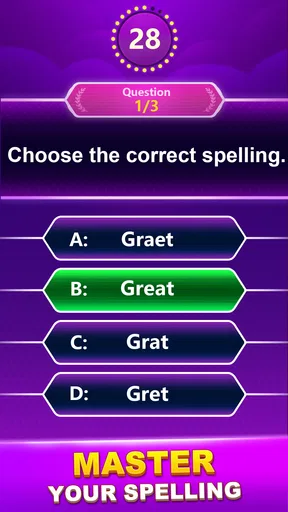
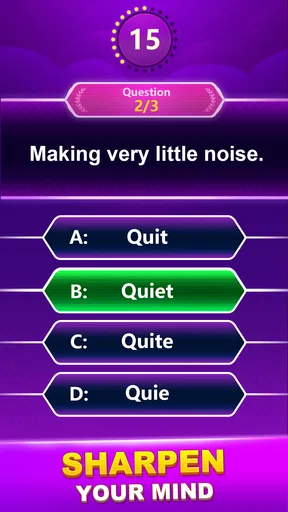
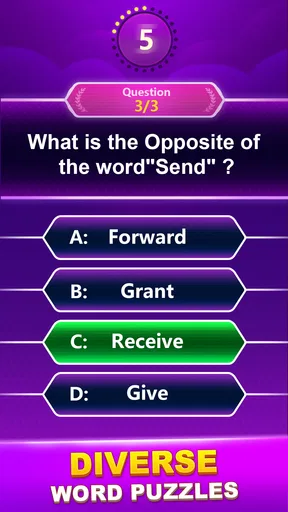
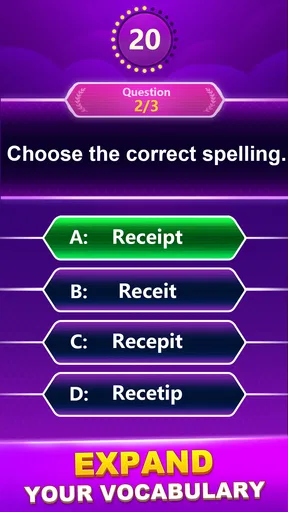
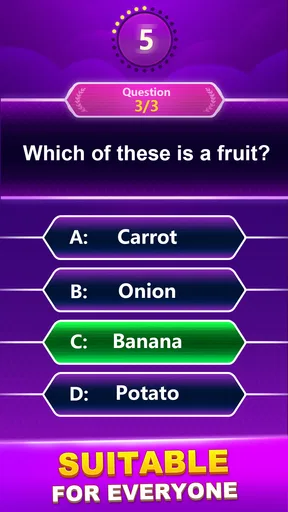
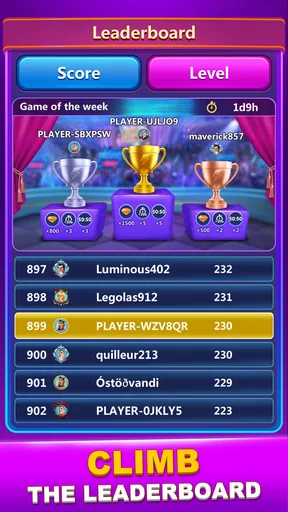
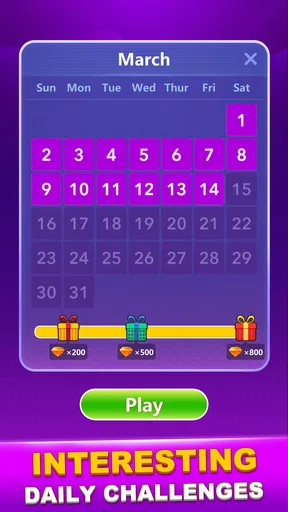
Our Review of Spelling Quiz - Word Trivia
 Analysis by Appyee
I went into Spelling Quiz - Word Trivia expecting a simple spelling exercise, and that is exactly where its appeal lies. This is a focused word game from Topy Games that turns vocabulary practice into short trivia-style challenges rather than a formal lesson. I found it easiest to enjoy in small sessions: a few rounds while waiting for an appointment, during a coffee break, or whenever I wanted something more active than scrolling.
The central idea is straightforward. The game asks me to work with spelling and word knowledge, then rewards careful reading and quick recall. It does not try to become a full language course, a dictionary, or a competitive word-board game. Instead, it sits in a useful middle ground: lighter than structured study, but more mentally engaging than a completely passive pastime. My overall view is that it works best as a casual vocabulary workout, provided you are comfortable with repetition and do not expect deep explanations for every answer.
How the word challenges feel in everyday play
The first thing I noticed is how quickly the game gets to its main activity. There is little need to learn a complicated control scheme, which makes it approachable for children, adults, and anyone who simply wants to test their spelling without reading a long tutorial. The “Everyone” age rating also matches that accessible presentation. I could hand it to a family member who was not familiar with mobile word games and explain the basic idea almost immediately.
That simplicity is not the same as being effortless. Spelling questions often expose a different kind of weakness from ordinary trivia. I might recognize a word when reading it but hesitate when deciding which spelling is correct. In other rounds, I know the general meaning but get slowed down by a vowel, a repeated consonant, or an ending that looks almost right. Those moments make the game more useful than a basic vocabulary flashcard because they force active recall.
I also like that the format fits fragmented time. A traditional crossword can require a longer, uninterrupted session, while a word-board game may become more interesting only when another person is available. This title is more convenient when I have two or three minutes and want a clear mental task. It is not the kind of game I would open for a rich story or a large strategic system; I open it because I want a compact spelling challenge.
The store identifies it as a spelling quiz, but I would describe the experience more broadly as casual vocabulary training through repeated word decisions. That distinction matters. Someone looking for grammar lessons, pronunciation practice, or writing feedback will not get the same value here. Someone who wants to sharpen visual familiarity with common words may find the format much more suitable.
Why the short-session design works
Short rounds create a useful low-pressure routine. I can play without committing to a long campaign, and that makes it easier to return regularly. The game is particularly practical for learners who struggle to maintain a study schedule because it lowers the effort needed to begin. Opening a dedicated language textbook can feel like work; answering a handful of word questions feels more manageable.
There is also a psychological advantage to the quiz format. When I miss a word, the mistake feels specific. I can identify whether I rushed, confused similar spellings, or simply did not know the word. That makes the session more informative than guessing randomly in a word puzzle where the reason for failure is harder to isolate. I recommend pausing briefly after a mistake instead of immediately tapping through. The extra moment helps turn an error into something memorable.
One practical technique is to keep a small note of words that repeatedly cause trouble. I would not record every unfamiliar term, because that would turn a casual game into an unnecessary chore. Instead, I would write down only the words that I miss twice or that I recognize but cannot spell confidently. Reviewing that short list later gives the game a second layer of usefulness and prevents the questions from disappearing as soon as the round ends.
Another helpful habit is to play when I am alert enough to think but not under pressure to perform. If I rush through questions while distracted, the result measures my attention as much as my spelling. That is not necessarily bad for a casual game, but it can make the experience feel unfair. I get more value when I treat each answer as a small reasoning task rather than a speed test.
What makes it more than a basic spelling drill
The trivia framing gives the practice a little more variety than copying words or memorizing lists. I am responding to prompts and making decisions, so the session has a game-like rhythm. That rhythm matters because repetition is essential for spelling improvement, yet repetition can become dull when it feels too obviously instructional.
I found the strongest benefit in recognition. Repeated exposure helps me notice familiar word patterns, especially when I already have partial knowledge. The game can reinforce the difference between a word that looks natural and one that is merely plausible. This is valuable for younger players building confidence, language learners strengthening everyday vocabulary, and adults who want a gentle mental warm-up.
Still, recognition should not be confused with mastery. Choosing the correct spelling from options is easier than producing the word independently in a message or essay. I would use the game as one step in a broader routine, then apply the words in writing. For example, after a session I might create a sentence with a difficult word or type it from memory. That small follow-up turns passive recognition into a more transferable skill.
The game’s popularity suggests that this compact approach connects with a broad audience. It has a 4.8 average from around 100 thousand ratings, and it has passed 10 million installs. Those figures do not prove that every player will enjoy it, but they do indicate that the straightforward word-game format has found a substantial audience. I can understand why: it is easy to start, easy to explain, and useful without demanding a serious study commitment.
The limitations I noticed during longer sessions
The same simplicity that makes the game approachable can limit its depth. After several consecutive rounds, I wanted more context around difficult answers. A spelling quiz can tell me which choice is correct, but an explanation of the word’s meaning, a related example, or a note about a common confusion would make the learning stronger. Without that extra layer, some mistakes remain isolated facts rather than lessons I fully understand.
This is the main reason I would not treat it as a replacement for a language-learning app or a reference tool. If my goal were to improve grammar, build a themed vocabulary, or understand why a spelling follows a particular rule, I would choose a more instructional alternative. A dictionary is better for definitions and usage, a flashcard system is better for deliberate review, and a writing-focused app is better for applying new vocabulary in context.
There is also a natural ceiling to the entertainment value of a focused quiz. Players who need constant novelty, elaborate progression, or a strong competitive layer may find the experience too narrow. I enjoyed the clarity, but I would not expect every session to feel fresh indefinitely. The best way to avoid fatigue is to use it as a short daily activity rather than trying to turn it into a long gaming marathon.
Because the game is free, it is easy to try without an upfront purchase. However, it includes optional in-app purchases ranging from $0.99 to $49.99 per item. I would advise checking the purchase prompt carefully, especially if a child is using the device. The free entry point is convenient, but anyone who wants to keep spending strictly controlled should review their device’s purchase protections before handing the game over.
The version I reviewed is 3.8, and the game runs on Android 7.0 or later. That makes it accessible on a wide range of older Android devices, although actual comfort will still depend on the phone’s screen, responsiveness, and the player’s preferred text size. I would not choose a device solely for this game, but its modest requirements make it a practical option for someone who does not own a recent phone.
Who will get the most from it
I think it is a particularly good match for people who enjoy quizzes but want something constructive. It can provide a small mental reset between tasks without the commitment of a large puzzle game. Parents may also find it useful as a light vocabulary activity for children, provided they remain aware of optional purchases and encourage discussion around unfamiliar words instead of focusing only on the score.
Language learners can benefit from it when their basic reading ability is already strong enough to recognize the questions. The game is less helpful for someone who needs extensive translation or pronunciation support, because spelling recognition alone does not cover those needs. For that audience, I would pair it with listening practice and a dictionary rather than relying on the quiz as the main study tool.
It can also suit adults who want to maintain a regular word habit without making a formal commitment. A realistic routine would be to play during a daily pause, note one or two troublesome words, and then use those words in a sentence later. That workflow takes only a little extra effort but gives the session more lasting value. The game supplies the prompt; the player has to supply the reflection.
I would be more cautious about recommending it to someone who dislikes multiple-choice or recognition-based exercises. If you prefer constructing words from scratch, solving cryptic clues, or competing on a shared board, a crossword, an anagram game, or a multiplayer word title may be more satisfying. This game’s strength is its directness, so players seeking elaborate mechanics should look elsewhere.
How it compares with familiar alternatives
Compared with a crossword, this is easier to enter and less dependent on having a long block of free time. Crosswords usually offer richer clue interpretation and a stronger sense of completing a grid, while this game delivers more immediate spelling decisions. I would choose the quiz for a quick break and a crossword when I want a deeper, slower puzzle.
Compared with flashcards, it feels more playful but usually less controlled. Flashcards let me choose exactly which words to study and revisit them according to a deliberate schedule. This game is better at making practice feel effortless, but I have less control over the learning sequence. If I am preparing for a test or targeting professional vocabulary, flashcards remain the more precise tool.
Compared with a full language-learning course, it is much lighter. That is both its advantage and its limitation. I can begin without planning a lesson, but I do not get the same structured progression across reading, listening, speaking, and grammar. I would recommend using this title as a supplement for word awareness, not as a complete path to language proficiency.
Compared with an ordinary trivia game, it offers a narrower subject but a clearer benefit. General trivia may provide broader knowledge, while this game repeatedly brings attention back to spelling and vocabulary. If I want variety across history, science, and entertainment, I would pick general trivia. If I want my short gaming session to stay centered on words, this is the more focused choice.
Small habits that improve the experience
My first tip is to slow down on words that look almost correct. The most tempting answer is often the one that matches how the word sounds, and English spelling does not always reward that instinct. Reading each option fully before tapping helps separate a genuine answer from a familiar-looking mistake.
My second tip is to treat repeated errors as a personal curriculum. Instead of feeling frustrated when the same kind of word appears again, I would group mistakes by pattern: endings, doubled letters, vowel combinations, or words whose spelling does not follow pronunciation. Even if the game does not present those categories explicitly, creating them mentally makes practice more organized.
My third tip is to change the purpose of a session depending on my energy. When tired, I use it as a relaxed recognition game and avoid judging my ability by the result. When focused, I use each question as a mini lesson and try to explain why one spelling looks right. This prevents the game from becoming either too demanding or too mindless.
Finally, I would avoid measuring progress only by winning streaks or correct answers. A better sign is whether a word that once caused hesitation becomes familiar later in ordinary reading or writing. That is where the game’s value becomes visible outside the screen. The quiz is a useful trigger for attention, but real improvement comes from seeing and using the words afterward.
My recommendation after testing the full experience
Spelling Quiz - Word Trivia is a clear, approachable word game with a sensible place in a casual learning routine. Topy Games keeps the focus on spelling and vocabulary rather than burying the activity under complicated systems. I appreciate that I can start quickly, play in short bursts, and leave a session feeling that I exercised a specific mental skill.
Its weaknesses are equally clear. It does not offer the depth of a structured language course, the flexibility of a serious flashcard tool, or the richer solving experience of a crossword. Optional purchases also mean that families should pay attention to device settings. Most importantly, players who need detailed explanations may find the quiz format too limited on its own.
For me, the best recommendation is simple: try it if you want a free, accessible spelling game for brief sessions, especially if you enjoy quizzes and want vocabulary practice to feel less formal. Use it alongside writing, reading, or dictionary work if learning is your priority. Skip it if you need advanced instruction, pronunciation training, or a complex word-game system. With that expectation, it is an enjoyable and practical little brain workout rather than an all-purpose language solution.
Verdict
Strengths of Spelling Quiz - Word Trivia
- Quick quizzes make it easy to practice spelling in short sessions.
- Covers a range of word difficulties for different skill levels.
- Immediate feedback helps identify and correct spelling mistakes.
- Trivia-style gameplay keeps practice more engaging than a standard word list.
- Simple controls make the game accessible for younger players and beginners.
Limitations of Spelling Quiz - Word Trivia
- Some questions may feel repetitive after extended play.
- Advanced learners may find the vocabulary range too limited.
- Mistakes can be frustrating when answers depend on unfamiliar words.
- Progression may lack depth for players seeking a more competitive challenge.
- Gameplay can become less engaging without additional modes or variety.
Other Releases by Topy Games
View All

Trivia Master - Word Quiz Game
Trivia4.5

Gin Rummy: Classic Card Game
Card4.9

Bible Trivia - Word Quiz Game
Trivia4.6
Similar Picks in This Category
View All
Word Search - Word Puzzle Game
Bluetile4.8

Word Search Quest - Puzzles
Blackout Lab4.8

CodyCross: Crossword Puzzles
Fanatee, Inc.4.7

Words of Wonders: Crossword
Fugo Games4.9

Wordscapes: Word puzzle game
PeopleFun4.7

Word Search Explorer
PlaySimple Games4.9
Frequently Asked Questions
What is Spelling Quiz - Word Trivia, and how does it work?
Spelling Quiz - Word Trivia is a word-based quiz game focused on testing and improving your spelling knowledge. It presents questions or challenges that require you to identify, select, or correctly spell words. The gameplay is generally simple to understand, making it suitable for casual players, students, and anyone who enjoys language puzzles. Difficulty may increase as you progress through the available rounds.
Is Spelling Quiz - Word Trivia suitable for children and students?
The game can be useful for children, students, and adults who want to practice spelling in a more entertaining format. However, suitability depends on the vocabulary level, question difficulty, and the child’s reading ability. Parents should review the app’s age rating and content information before downloading it for younger users. It may work best as a supplement to regular learning rather than a complete educational tool.
Does Spelling Quiz - Word Trivia require an internet connection?
Whether an internet connection is required can depend on the specific version and features being used. Basic quiz content may be available offline, but advertisements, updates, online rankings, analytics, or additional content could require mobile data or Wi-Fi. Before relying on the game during travel or in areas without coverage, open it once while connected and test whether the main quiz modes remain accessible offline.
Is Spelling Quiz - Word Trivia free to download and play?
Spelling Quiz - Word Trivia may be available as a free download, but free access does not always mean that every feature is completely unrestricted. Many quiz games include advertisements, optional purchases, extra lives, premium content, or other in-app payment features. Check the Google Play Store or Apple App Store listing for the current pricing details, supported purchases, and subscription information before installing.
What should I know about ads, permissions, and privacy before installing?
As with many free mobile games, Spelling Quiz - Word Trivia may display advertising and request certain permissions or collect usage information. The exact practices can vary by platform and app version, so review the store listing and the developer’s privacy policy before downloading. Pay particular attention to advertising identifiers, analytics, purchase-related data, and any permissions that seem unnecessary for a spelling quiz.
Play our best games!


